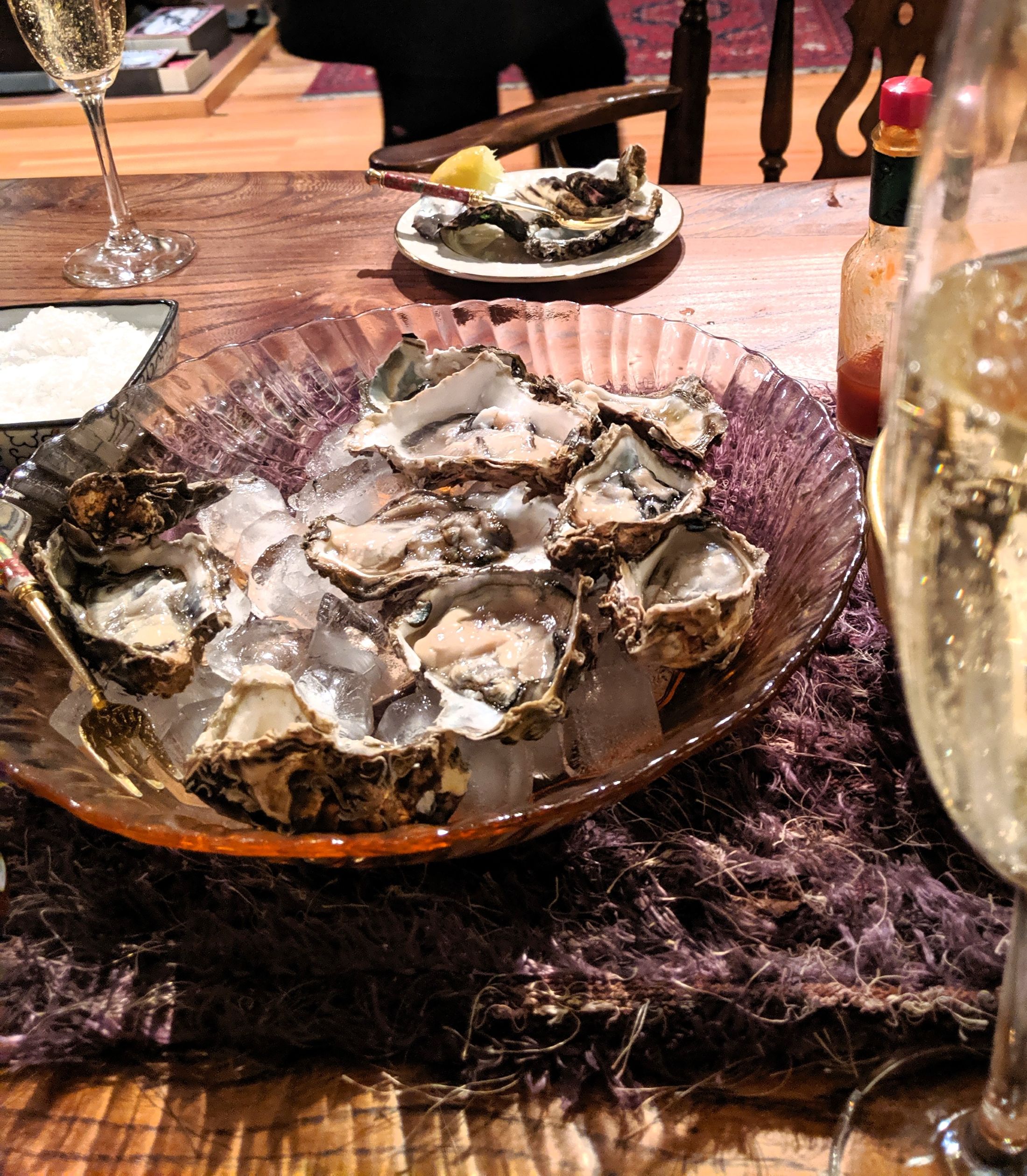
Oysters are one of those foods people either love or hate. They are considered either sublime aphrodisiacs or slimy bags of brine. In Roman times they were considered such a delicacy that they were preserved in Britain and transported to Rome for the rich. In Europe and New York during the 1800s, oysters were the food of the poor, eaten as a cheap protein filler. Later, they became a delicacy for the rich, baked with an overabundance of accoutrements in the South of the USA, but showcased naked and simply in the Oyster Bars of the West Coast.
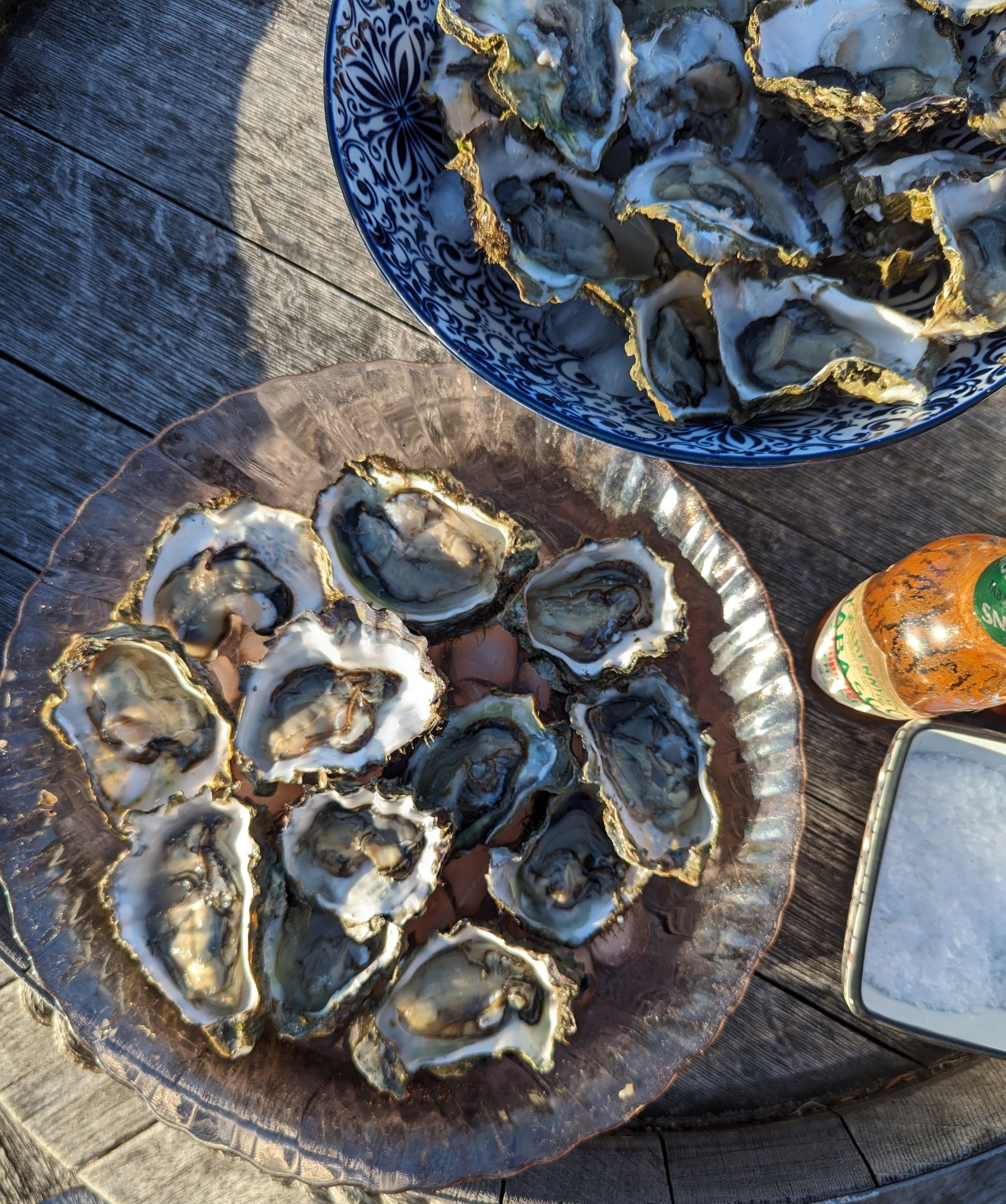
At the moment they are at their best in the Sounds- plump and creamy. We have an over-abundance of them on our beach. They have established themselves so well this year, that they have actually taken over the beach to the point where we are thinking of raking them all off and dumping them. The shells are sharp and cut feet, harvesting hands and dog paws badly. Mind you that doesn’t stop Frankie from heading into the muddiest part of the beach and scraping oysters off semi-submerged branches and eating them. I swear that dog can sniff out when they are at their prime. Harvesting them here is easy- the shucking a bit trickier. A good shucking knife helps and maybe even a strong gardening glove. One of my neighbours freezes the fresh oyster in the shell and when she takes them out to eat they open up, making it easier to get the oyster out. The naturally occurring oysters on our beach are quite misshapen which makes them harder to shuck. Graeme has successfully “farmed” oysters from spat in a burley cage dangling off the jetty, which makes for more even smoother oysters.

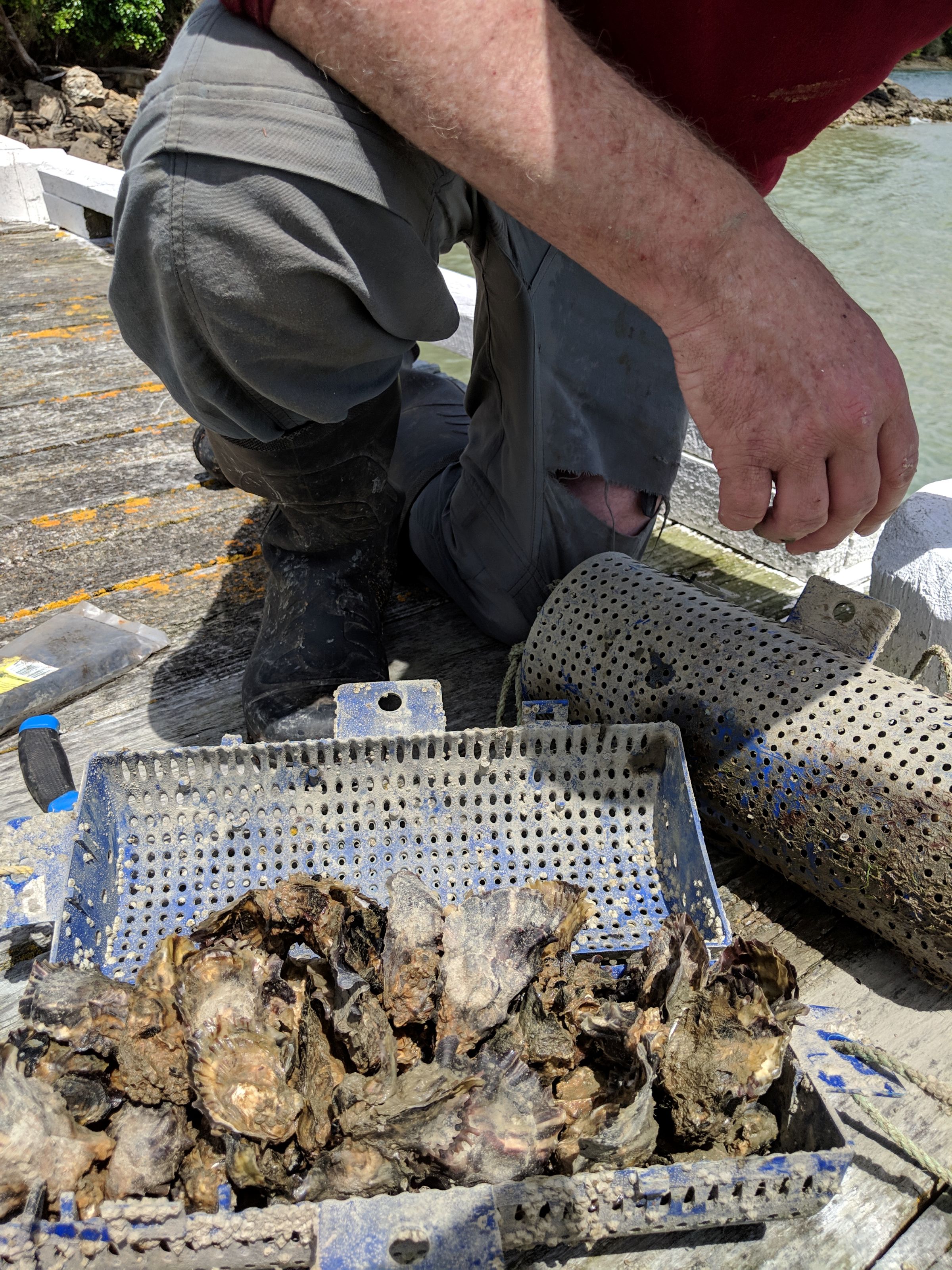
The following is my favourite way to eat oysters ever, as although they are cooked, they retain much of the flavour and texture of a raw oyster. The flavours are subtle but complement the creamy freshness of the oyster.
Asian Steamed Oysters Serves 2-4 people as appetiser Prep time: 4 minutes Cooking time: 2 minutes
12 fresh oysters 2cm piece ginger, peeled and cut into fine threads 1 tablespoon coriander leaves, finely chopped 12 teaspoons light soya sauce 12 teaspoons sesame oil
Put the oysters into individual ceramic spoons or in their half-shells if you have them, and place these in a bamboo steamer. Put 3-4 threads of ginger on each oyster and sprinkle with chopped coriander. Add 1 teaspoon of the soy sauce to each oyster. Place the steamer over a pot of simmering water and cover with the lid. Steam for 2 minutes. Meanwhile, heat the sesame oil in a small pot until very hot. Pour 1 teaspoon of oil on to each oyster and serve immediately, eating the oysters straight off the spoon.
Note: It is critical to get the oil very hot so that it amalgamates the flavours without giving an oily taste.
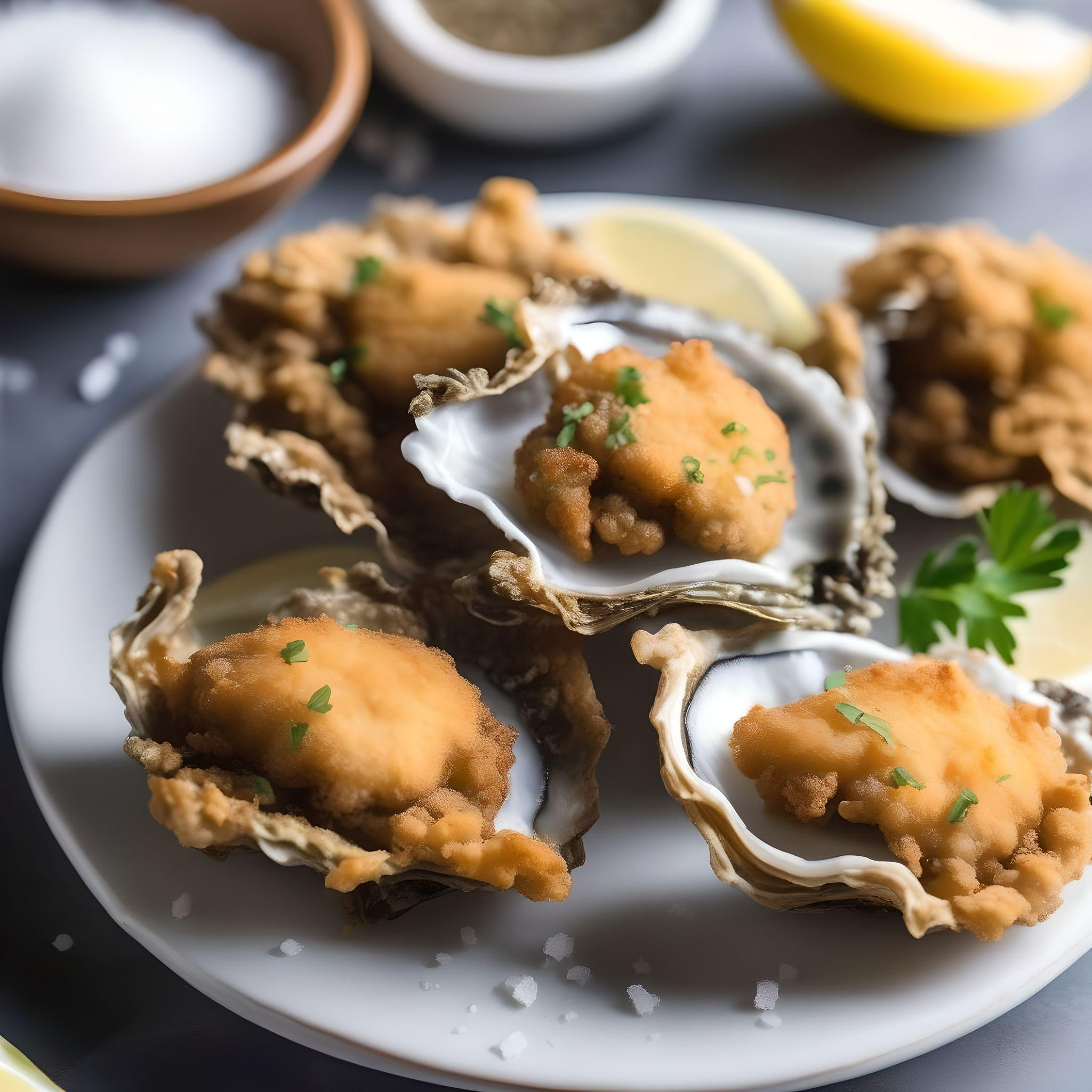
For the best fried-oyster dishes I like this Taiwanese version as it produces crisp batter and perfectly cooked oysters inside 200gm oysters Pinch of salt and twist of pepper 1 tablespoon flour
¾ cup of flour ½ teaspoon baking powder 1/3 cup water 1 egg ¼ teaspoon salt Cook the oysters in boiling water for one minute; remove and drain. Mix the oysters with the salt pepper and one tablespoon of flour. In another bowl mix all of the rest of the ingredients to form a paste. Heat a wok or large pot with oil. Coat the oysters with the paste and deep fry for three minutes until golden brown. Remove from the oil and drain on a paper towel. Serve with peppercorns ground up with salt.
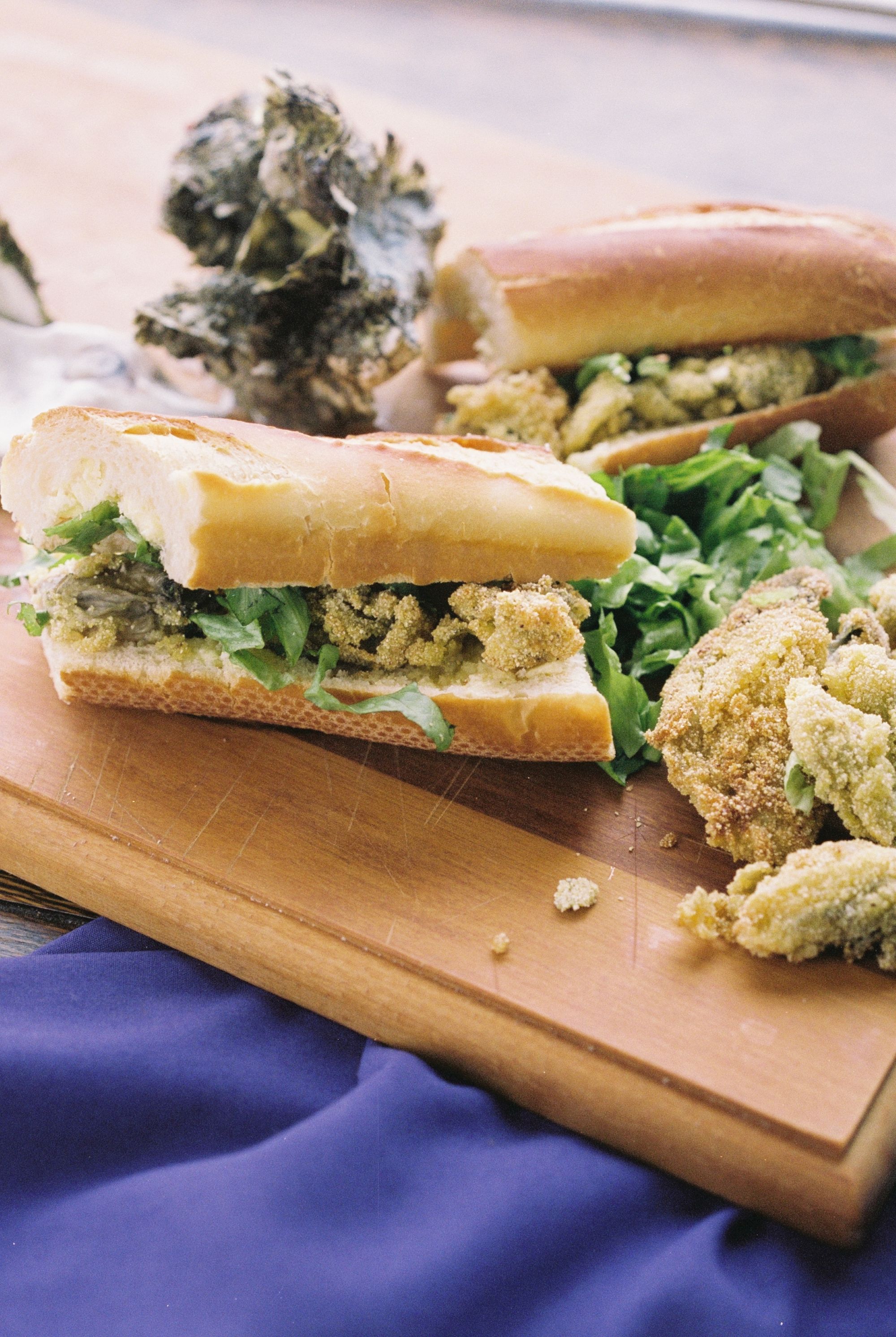
Alternatively coat your oysters in flour, egg and then polenta with a hint of chilli or paprika in it and fry them before putting into a piece of baguette with lettuce and mayo, and voila you have an oyster Po’Boy, the sandwich made in New Orleans to feed the striking tram drivers for free.
Many of those traditional oyster recipes, like Oysters Kirkpatrick and Angels on Horseback, combine oysters and bacon for a reason. They are a match made in heaven. But, I think that adding cheese, breadcrumbs and other ingredients, as the recipes often do, ruins the oysters. Instead, try baking some bacon strips on one side. Then flip the bacon over and put the oysters on top of the bacon. While they are baking, melt some butter in a pan and cook it on medium-low until the butter is nutty brown. Add a good squeeze of lemon juice and swirl it into the butter. When done, remove the oysters from the oven and put them on a serving dish. Drizzle some of the burnt butter sauce on top and add just a small sliver of the cooked bacon to each.
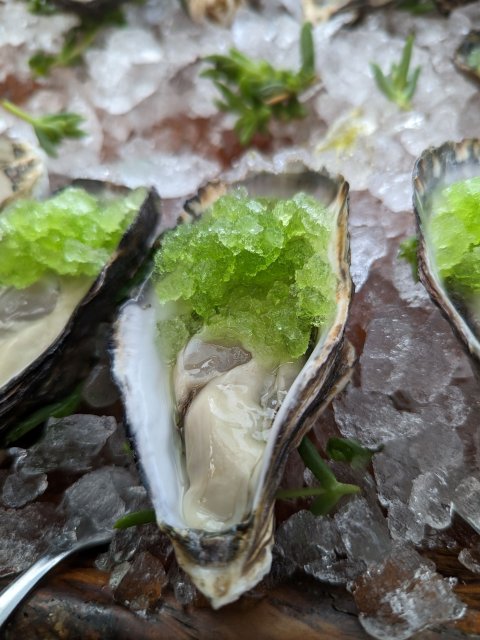
I could never eat raw oysters until a friend called me to a Sydney hotel one day where he had just ordered a dozen plates of a dozen raw oysters (Yes 144 oysters). He knew he needed help getting through them. I didn’t quite eat half of the oysters on offer, but they were shiningly fresh and delicious and I came to enjoy them with a good dash of black pepper, a flake or two of salt and some lime juice. If you are thinking of dressing up a “naked” (raw) oyster, keep it simple. Mix 1 tablespoon of lemon juice, 1 teaspoon grated ginger, ¼ teaspoon salt and 1 tablespoon of finely chopped spring onions- add a dash of chilli powder if you like. Sprinkle this over the oysters in their half shell and serve.
This recipe is adapted from one of Greg Malouf’s in his excellent book “arabesque”. The pomegranate molasses gives a nice tart taste to the dressing without being overpowering.
Tomato-Pomegranate Dressing Serves 4-6 as a starter with 6- 4 oysters each Prep time 10 minutes
2 teaspoons pomegranate molasses 2 spring onions, finely chopped- white and green parts 2 ripe tomatoes, de-seeded and finely diced Juice of ½ lemon 180ml extra-virgin olive oil 24 fresh oysters
Put all of the ingredients, except the oysters, into a bowl and stir well. Season with salt and pepper and stir again. Place 6 oysters onto a separate plate for each person and put a teaspoon of the dressing on top of each oyster. Serve immediately.
You could also try a classic mignonette with finely diced shallots macerated in red wine vinegar and a lot of coarsely black pepper. Do as the Parisians do and serve it with thinly sliced rye bread. Other dressings that complement the raw oyster nicely include using Japanese ponzu sauce, which has a nice lemony taste, or for a Mexican flavour combine tabasco, chopped spring onion and a squeeze of lime with a splash of olive oil. Of course, you should do as Pauline Bonaparte (Napolean’s beautiful and scandalous sister) did every morning for breakfast; eat them with champagne. My favourite!